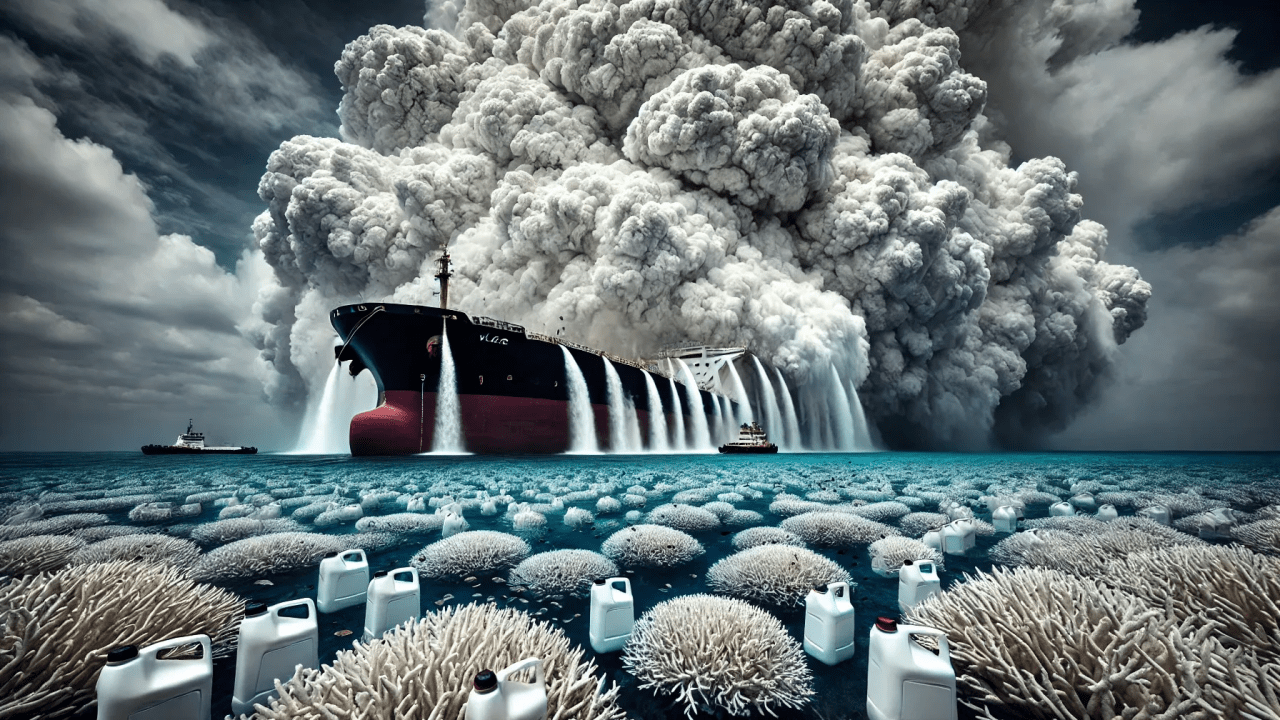
Ballast water treatment systems play a crucial role in preventing the spread of invasive species and ensuring compliance with international environmental regulations. About 50% of the ships employ chlorine-based ballast water treatment systems to disinfect ballast water before discharge. However, malfunctions in the neutralization process of these systems can result in excessive chlorine levels in discharged water, posing serious environmental risks.
Chlorine-based systems use chemical disinfection as part of the process to eliminate harmful microorganisms from ballast water. These systems generally rely on direct addition of sodium hypochlorite or electro-chlorination to achieve sterilization. After disinfection, a neutralization process using chemicals like sodium bisulfite/ thiosulfate etc is required to remove residual chlorine before the treated water is discharged back into the ocean.
Causes of Malfunction in Neutralization Processes
Malfunctions in the neutralization process can occur due to various reasons, including:
- Equipment Failure: Mechanical or electrical failures in dosing pumps, sensor feeding pumps, sensors, or other control units, partially or fully blocked piping can prevent the proper addition of neutralizing agents.
- Human Error: Mistakes in system design and installation, chemical dosing, or maintenance can lead to ineffective neutralization.
- Chemical Supply Issues: Insufficient supply or incorrect chemical mixtures may result in an incomplete neutralization process.
- System Overload: High chlorine demand due to system sensors malfunction during ballasting can exceed the system’s neutralization capacity.
Environmental Consequences of Out-of-Limits Discharges
When chlorine-based ballast water is discharged without proper neutralization, it can cause significant environmental harm:
1. Toxicity to Marine Life
Chlorine and its by-products, such as chlorinated organics and hypochlorous acid, are highly toxic to marine organisms. Even low concentrations can harm plankton, fish, and invertebrates, disrupting food chains and ecosystems.
2. Alteration of Water Chemistry
Excess chlorine can alter the natural chemical balance of seawater. It can react with organic materials to form harmful disinfection by-products (DBPs), such as trihalomethanes and haloacetic acids, which are persistent and bioaccumulative.
3. Damage to Coral Reefs
Coral reefs are particularly sensitive to chlorine exposure. Even small amounts can cause coral bleaching and disrupt the delicate symbiotic relationships within reef ecosystems.
Case Study: The Chlorine Discharge Impact of a VLCC
To understand the magnitude of unneutralized chlorine discharge, consider a Very Large Crude Carrier (VLCC) with a ballast water capacity of 140,000 cubic meters (m³). If the ship discharges unneutralized ballast water with a residual Total Residual Oxidant (TRO) of 4 ppm:
- Total ballast water discharged: 140,000,000 liters
- Total chlorine released: 560,000,000 mg (or 560 kg)
- Equivalent to domestic bleach: Given that household bleach typically contains 5% sodium hypochlorite (50,000 mg/L of active chlorine), this discharge corresponds to:
Around 11,200 1-liter bottles of household bleach dumped into the ocean.
This staggering amount highlights the critical importance of ensuring proper neutralization before ballast water is discharged to prevent severe marine pollution.
Mitigation Strategies and Best Practices
To minimize environmental risks, shipping operators must implement strict monitoring and preventive measures, including:
- Regular Maintenance and Calibration: Ensuring that neutralization systems are well-maintained and calibrated to operate effectively.
- Onboard Monitoring with Portable Instruments: To verify the good operation on malfunction in the deballasting process.
- Crew Training: Educating ship crew members on proper system operation and emergency response procedures.
The malfunction of chlorine-based ballast water treatment systems can have severe environmental consequences, including marine toxicity, ecosystem disruption, and regulatory violations. To protect marine biodiversity and comply with international regulations, it is imperative for the maritime industry to ensure the proper functioning of neutralization processes, invest in reliable monitoring systems, and adopt best practices in ballast water management.
By taking proactive measures, the industry can mitigate the risks associated with chlorine-based discharges and contribute to the sustainability of global marine ecosystems.
 Saron Marine Environmental Services